Two arcades, two philosophies
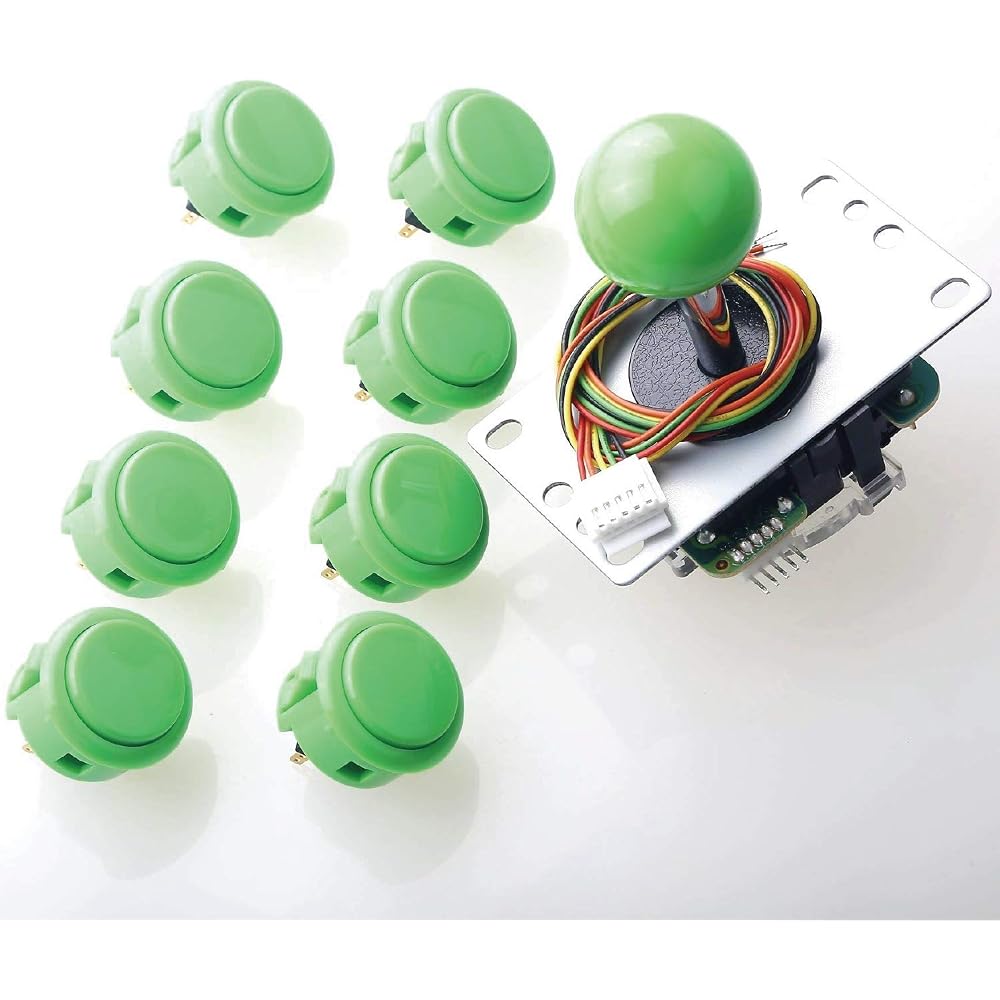
Walk into a Tokyo game center and every cabinet wears the same uniform: a ball-top lever and flat, quiet buttons that actuate if you look at them firmly. Walk into a 1990s American arcade and the controls were the opposite: tall bat-top levers you could hang off, and convex buttons with a springy, audible click that survived a decade of teenagers. Those are the Sanwa and Happ traditions, and nearly every control decision in a home build reduces to choosing between them — or deliberately mixing the two.
This is not a contest with a winner. It is a feel decision, and the right answer depends on the games you play and the hands you play them with.
The levers: throw, tension and return
The Sanwa JLF-TP-8YT is the reference Japanese lever: a light, precise stick with a short throw, a fast and positive return to center, and a restrictor plate that switches between 4-way and 8-way. Inputs register with small, deliberate movements. Fighting-game players favor it because charge motions, dashes and quarter-circles come out clean at speed; shmup players favor it because a two-millimeter nudge is a two-millimeter nudge.
Happ-style levers — the bat tops bundled in American-style kits like the SJ@JX Happ Style kit — are longer, heavier-sprung and longer-throw. The stick travels further and pushes back harder. For beat-’em-ups, sports titles and the Midway and Atari catalog, that resistance feels correct, because it is what those games shipped with. Players who grew up on American cabinets often find a JLF vague for the first week; players raised on Japanese cabinets find a bat top exhausting. Both are right.
The buttons: sensitivity vs. ceremony
Sanwa OBSF-30 buttons are 30mm snap-ins with a non-clicking built-in switch: extremely light, extremely sensitive, and quick to reset. Rest a fingertip on one and it has nearly fired. That sensitivity is a feature in fighters and rhythm-adjacent play, and a liability for players who rest their hands on the panel — accidental inputs are the classic OBSF complaint.
Happ-style buttons are larger, convex, and mounted with separate microswitches that click — audibly and tactiley — on every press. They take more force, tolerate resting hands, and shrug off abuse. The LED buttons in budget kits such as the EG STARTS 2-Player Kit follow the American pattern: bat tops, chunky illuminated buttons, and a forgiving feel that suits a first build and a family panel.
The kits make you choose — so choose on purpose
| Kit | Style | Levers | Buttons | Encoders |
|---|---|---|---|---|
| EG STARTS 2-Player Kit | American | 2× oval bat top | 20× LED | 2× zero-delay USB |
| Hikig 2-Player Kit | Japanese | 2× 35mm ball top | 20× LED | 2× zero-delay USB |
| SJ@JX Kit | American (Happ style) | Bat top | 16× LED in this variant | 2-player zero-delay USB |
The cabinet kits respect the same divide. The LEP1 Customs LVL23 is ordered in a HAPP or Sanwa drilling pattern — 28mm button holes for American parts, 24/30mm for Japanese — and the choice is permanent once the panel is cut. When a kit asks, it is asking about hole diameters and mounting depth, not brand loyalty: Sanwa snap-ins want panels 2–5mm thick at the button, while American buttons with separate switches need more depth under the panel. Measure before you commit.
Building from parts instead
Builders wiring a panel from individual components get to mix traditions deliberately — a JLF lever with American buttons is a legitimate, even distinguished, combination. The Reyann Zero Delay Encoder is the proven board for that approach on the American side: a single-player USB encoder with harnesses sized for Happ-style parts and .187-inch quick disconnects. For a Japanese-style panel, the JLF connects with a standard 5-pin harness and the OBSF buttons are two terminals each — the wiring is the same afternoon’s work either way.
Mounting depths, hole sizes and other ways panels go wrong
The feel argument gets the attention; the geometry causes the returns. Japanese and American parts assume different panels. Sanwa OBSF buttons are snap-ins that grip panels 2–5mm thick at the hole — fit them in a thick MDF panel and they need routed relief pockets underneath or a switch to screw-in variants. American buttons are the opposite design: a long threaded body with a nut beneath, tolerant of thick panels, with the microswitch as a separate, replaceable part. Joystick mounting differs too — a JLF mounts on a flat plate pattern under a Japanese panel, while American levers traditionally mount with carriage bolts through the panel top. None of this is difficult; all of it must be decided before the panel is drilled, because a 30mm hole cannot be un-drilled into a 28mm one. This is why kits like the LEP1 LVL23 ask the HAPP-or-Sanwa question at checkout: they are cutting your answer into wood.
Builders converting an existing panel should measure what they own before ordering against it. And builders designing from scratch hold one advantage: the underside of the panel is free real estate. Lay out encoder boards, wiring runs and mounting plates on paper at full scale, sticks and buttons included, before a single hole is cut — collisions between a button tail and a joystick base are the most common panel defect in the hobby, and the most avoidable.
Maintenance and the ten-year view
Controls are consumables with long lives, and the two traditions age differently. A Sanwa button’s switch is integral to the button — when it eventually tires after its rated life in the millions of presses, you replace the button, which snaps out in seconds. An American button’s microswitch is a separate part costing very little, swapped with two quick-disconnects while the button body stays in the panel for decades. Levers follow the same logic: the JLF’s microswitch PCB is a single replaceable board, and its spring and actuator are service parts; American levers are assemblies of individually replaceable switches and springs. Neither tradition wins this category — both were designed for commercial operators who billed downtime — but parts availability should inform a build meant to last: genuine Sanwa components remain in continuous production and are stocked worldwide, which is one more reason the JLF is the safe default for a panel you intend to keep.
Our recommendation, by game list
- Fighters, shmups, precision platformers: Sanwa. JLF lever, OBSF buttons, short throw, light touch.
- Beat-’em-ups, sports, Midway/Atari classics, family panels: Happ style. Bat tops, clicky buttons, controls that forgive enthusiasm.
- Mixed library, one panel: Japanese lever, and your choice of buttons — the lever feel dominates long sessions more than the button feel does.
- First build, tight budget: A complete kit in whichever style matches the arcades you remember. The EG STARTS and Hikig kits cost the same afternoon to install; nostalgia is the tiebreaker.
A closing note on handedness and habit, because it decides more real purchases than any specification: the dominant feel in your muscle memory is the one from the arcades you actually stood in. Reconstruct that honestly — not the arcade you wish you had grown up in, the one whose tokens you actually spent — and order against the memory. Controls are the part of the cabinet your body reads; everything else is read by the eyes, and the eyes are far easier to please twice.
Whichever side you land on, buy genuine parts from reputable sellers when you step up to Sanwa — clone JLF listings exist, and a lever that almost feels right is worse than an honest budget stick. Product pages for everything mentioned here carry full specifications and current seller pricing.